Survival Beliefs Build Survival Studios: How Artists Can Change Their Money Mindset
It wasn’t the bank account that needed to change first. It was the brain.
When I was broke, I didn’t just have a money problem.
I had a money belief problem. It took me years to realize that the second one was what kept me broke.
Let me explain.
At 29, I had four kids, an unexpected divorce, no degree, little experience, and no plan. I drove a forklift at Lowe’s by day, worked as a teacher’s aide by night, and squeezed in college whenever I could. I moved my daughters into my bedroom and rented out theirs to cover the rent. Money always felt just out of reach, and fear and scarcity followed me everywhere.
That’s the external story money told.
Beneath it was another story about what money meant, who it was for, and who I had to be to have it. I didn’t know I was telling it. That’s how beliefs work. They’re silent and constant, and they shape every choice you make.
I see the same thing in a lot of creative business owners. Talented people working incredibly hard are running their studios on beliefs they picked up long before they ever touched clay.
The Beliefs That Keep Studios Small
Here’s what I believed about money when I was broke, and how each belief tends to show up in a studio. See if any of them sound familiar.
“Money is for other people.” I believed money belonged to people with the right schools, the right connections, and parents who could help with a down payment. I wasn’t one of them. In a studio, this sounds like “Successful studios are for people with money behind them” or “That kind of business isn’t for someone like me.”
“Wanting it makes me greedy.” I believed that a good mom, a good educator, and a good person didn’t fixate on money. Artists hear a version of this constantly. Art should be accessible, so charging real prices feels wrong. Wanting a profitable studio can feel like betraying the craft.
“I’ll always be one bad month away.” No matter how much came in, the part of me that had been broke didn’t trust it. Good months felt like luck that was about to run out. In a studio, that looks like holding onto every dollar instead of reinvesting it in better equipment, more help, or marketing that would bring in more students.
“A stable paycheck is the only safe answer.” Risk was for people with safety nets. For artists, this sounds like “I’ll keep my day job until the studio is completely safe.” Sometimes that’s smart. Sometimes it’s the reason the studio never gets enough of your attention to grow.
“If I just work harder, I’ll get there.” This was my favorite lie. Hard work is necessary, but it isn’t sufficient. In a studio, it sounds like “If I just teach more classes, it will work out.” But more classes don’t help if nobody knows they exist. You can work for thirty years and still struggle if your beliefs about money are designed to keep you there.
I didn’t have wealthy beliefs. I had survival beliefs. And survival beliefs build survival businesses.
What Started to Crack It Open
Three things shifted me. None of them was dramatic.
Sales taught me money isn’t personal.
I spent ten years building new business sales territories in California, and I learned, in the most unsentimental way possible, that money rewards specific actions. Asking is one. Showing up consistently is another. Caring about the person on the other side of the table is a third.
I learned that money isn’t a referendum on your worth. It’s a measure of how much problem-solving you put into the world.
That’s the lesson I most want artists to hear, because it’s the heart of marketing. Selling your classes isn’t begging and it isn’t bragging. It’s telling people who want what you offer that it exists, asking them to come, and taking good care of them when they do. Those are learnable skills, not personality traits.
Real estate taught me money can work for you.
When my husband and I rented out our spare room, I felt something completely unfamiliar: money was working for me instead of the other way around. A bed I wasn’t sleeping in was generating income. That room eventually became the first of eight doors we built together.
For a studio owner, that same feeling comes from systems and recurring revenue. Think of memberships that renew, gift cards sold in November that fill classes in January, or an email that books a class while you’re at the wheel.
Watching my kids showed me I was teaching what I believed.
I watched how the way I talked about money got absorbed by my kids, whether I wanted it to or not. One of them would tense up when I sighed at a credit card statement. I realized this wasn’t just my problem anymore. Whatever I believed, I was teaching.
The same is true in a studio. If you talk about money with fear, your staff will price with fear, and your students will hear it too.
What I Believe About Money Now
Money is a tool. It isn’t a god or a villain. It amplifies who you already are. In a studio, a profitable business is what lets you pay instructors well, keep the kilns running, and keep the doors open for the students who love you.
Wealth isn’t the same as income. Income pays the bills. Wealth pays the bills when you aren’t working. A studio that only makes money when you’re personally teaching is income. A studio with systems, staff, and recurring revenue is building wealth.
Wanting it is a feature, not a flaw. Wanting to be free of next-paycheck math isn’t selfish. It’s sane. Stop apologizing for wanting your creative business to make money.
You deserve it. So do I. Poverty thinking is the real obstacle, not poverty itself. It will keep a studio small in a hundred different ways, even after the money starts coming in.
What You Can Do This Week
You can’t spreadsheet your way out of a money belief problem. Start here.
Notice the lies. When you feel that small, tight feeling about money this week, pause. It might come when a bill arrives, when you’re about to post a class price, or when you talk yourself out of sending the email to your list. Write down the exact sentence going through your head. I can’t charge that. People won’t pay for this. It’s not a good time to market. I’d be greedy.
Read them back out loud. Most of them will sound, in your own voice, like the lies they are.
Replace one. Not all of them, just one. Pick the one that runs most often and write a truer sentence next to it. “I can’t afford to market the studio” becomes “I’m not currently setting aside money for marketing.” One is a verdict. The other is a choice.
Read the truer one out loud, and repeat it tomorrow. Do it for 30 days and notice what changes, in your thinking and in your studio.
Shift your beliefs about money first. Your bank account will follow.
Want Help Turning Beliefs Into a Plan?
If you’re running a studio and suspect survival beliefs are setting your prices and your marketing, book a free call with us. Chase and I will help you look at the numbers and the next move with clear eyes.
About Tricia Fox
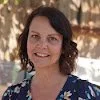
Tricia Fox is a creative business consultant who helps artists and studio owners build profitable creative businesses. She and her son Chase co-founded Mud Hut Pottery & Art Studio in Riverside, California, where they run classes, studio memberships, private events, and school programs. Tricia brings ten years in sales and more than ten years in marketing and digital advertising, and Chase brings the craft and day-to-day studio operations. Together, they advise studio owners on the decisions they’ve already lived through. Learn more at triciafox.org.