What I Would Tell the Little Girl in the Photo
I found this photo recently.
It's me, the summer of 1976- 50 years ago. I remember this day as if it were yesterday. I am at Lake Perris in Southern California with my family. I remember that brick red bikini. I am holding on tightly to a kiddie raft that I am attempting to float on, grinning like I don't have a care in the world.
I almost didn't post it. Because I know what was happening in that little girl's world that the camera couldn't see.
I was the youngest of three, born eight and ten years behind my siblings. I learned early on that my birth wasn’t planned; that I was an accident. It isn’t that my mom didn’t want me; it's that she probably felt her family was finished after having my older brother and sister. She and my dad both worked, so they moved in her alcoholic mother to help raise me. My grandmother, Marty, did her best and did make me feel loved. This attachment to my grandmother exacerbated the sibling rivalry between my siblings and me. My siblings didn’t care much about me and resorted to cruel teasing and bullying. Before I was old enough to understand what was happening, I had already absorbed the message that I was too much trouble, too much to deal with, too much — full stop.
And then came the voice. You know the one. You are a bad person. You are spoiled. You are a brat. You are unworthy. Why were you even born?
That voice started early. And it got louder. By the time I started kindergarten, the neighbor child molester had his way with me. I hated school and struggled miserably. I suspect the struggles with school had something to do with my undiagnosed ADHD. Then, at 15, I was raped in my own neighborhood while walking my childhood friend home. By the time I was old enough to start making choices about my life, I had a running internal monologue that told me I was destined for exactly what I had been handed: struggle, scarcity, and dysfunction.
I looked at this photo for a long time before I wrote this.
And I thought: what would I tell her?
Today is my birthday, so I am posting this to celebrate the little girl in the photo. Tricia -Circa 1976 at Lake Perris, CA.
I would tell her: that smile is the truth. The voice is a lie.
That inner critic — the one that said you were unworthy, unwanted, too much? It was never yours. You inherited it the way you inherit furniture. Someone put it in the house before you arrived. It doesn't belong to you. You do not have to keep it.
I would tell her: what happened to you is not your identity.
The things done to you — by circumstance, by people who should have protected you, by a world that didn't see you clearly — those things happened. They are real. You don't have to pretend they weren't. But they are not the sentence. They are not the whole story. They are the opening chapter of a story that goes somewhere else entirely.
I would tell her: do not become small.
The shame will try to shrink you. It will tell you to hide what happened, to never speak of it, to take up less space so no one asks questions. It will dress itself up as humility, or politeness, or keeping the peace. It is none of those things. Shame is a cage. And you were not built for a cage. What happened to you was not your fault. You do not owe anyone your silence. You do not have to disappear to make other people comfortable. Take up space. Use your voice. Stay big.
I would tell her: the wanting is right.
That thing you feel — that deep, persistent knowing that you were built for something more than this — that is not arrogance. That is not ingratitude. That is your compass. Do not let anyone take it from you. Do not silence it to make people more comfortable. Follow it. It will take you somewhere.
I would tell her: you are going to build something real.
Not because it was handed to you. Not because anyone believed in you first. But because you are going to decide to. You are going to be 29 years old, alone, raising four kids, driving a forklift at Lowe's — and you are going to decide that is not the end of the story. You are going to become educated. You are going to have a worthy career. You are going to build a $900,000 a-year business. You are going to own a real estate portfolio. You are going to help other women do the same.
You are going to become someone little girls look at and think: if she can do it, maybe I can too.
I would tell her: action cures fear.
Not waiting until you feel ready. Not white-knuckling it until the voice shuts up. You are going to learn that the only way through is through — that confidence is built on the other side of the doing. Every time you take the action you are afraid to take, the voice gets a little quieter. Not silent, maybe. But quieter.
I was not born into the life I live now.
I was born into struggle and dysfunction, into a house that told me I wasn't wanted, into a neighborhood that wasn't safe. The cards were not good.
But here's what I know now that I wish I could have told that little girl in the brown bikini: the cards you are dealt are not the game. They are just where you start.
You get to decide where you go.
And that little girl — the one with the paper boat and the big smile — she already knew it. She was already grinning like she had somewhere to be.
She did.
She does.
If this landed for you, I'd love to hear your story. Drop it in the comments. And if you're standing where I once stood — at the beginning of something you're not sure you're allowed to want — let's talk. That's exactly what I do.
They Called It Advice. It Was a Cage.
A school superintendent told me to be meek and mild. I thought he was helping. Twenty years later, I know better.
There is a particular type of silence that isn’t chosen. It’s assigned.
I was a new school administrator, eager in the way that only someone who genuinely loves their work can be. I sought out my superintendent — a man with experience, with authority — and asked him to mentor me. I wanted to learn. I wanted to grow. I was ready.
What he gave me instead has stayed with me for nearly two decades.
We were talking about women in leadership when he leaned in with the tone that signals I’m about to give you something valuable. He told me that women who enter leadership make a mistake. They get loud. They get bold. They try to play in a man’s world and lose their way doing it. They become bulldogs — aggressive, mean, hard.
Then he smiled and said, "Tricia, the best thing you can do is remember you are a woman. Be feminine. Be meek and mild."
He meant it as a gift. I received it as one. He’d been raised by a strong single mother. He respected women. He was trying to help me.
It took me years to understand what he actually said: Be quiet. Be small. Know your place — and make it a pleasant one.
There Is No Version of You They Won’t Label
Here’s something I’ve noticed — and I think you’ve noticed it too, even if you haven’t said it out loud.
No matter how a woman shows up in leadership, there is a ready-made word waiting to cut her down to size.
Too bold? Bulldog.
Too nurturing? Mother hen.
Too blunt? Aggressive.
Too composed? Cold.
Too passionate? Unstable.
Too strategic? Calculating.
The words change from day to day, but they all do the same job. They signal: you are taking up too much space. Adjust accordingly.
Not long ago, I stood up for my colleagues. I criticized behavior from a senior leader — behavior I had watched cause real damage to real people at a former company. I wasn’t aggressive. I wasn’t irrational. I was explicit and honest, speaking up for a team I genuinely cared about.
His response? He told me to stop being a mother hen and let my male boss lead.
In one sentence, my advocacy became interference. My care became control. My courage became something somewhat embarrassing — just a woman clucking around, overstepping, ruffling feathers.
I’ve thought about that moment a lot. Not with bitterness — with clarity. Because what he revealed wasn’t something about me. It was something about a system that is very good at making women feel like the problem when really they’re just the threat. Give her a nickname, and all of a sudden, she’s the one who should feel ashamed.
She won’t. Not anymore.
What Shrinking Costs You
Here is what I want you to understand: the instruction to be small rarely comes from enemies. It comes from people who may genuinely believe they’re helping you. Mentors. Supervisors. Sometimes, even people who love you.
And it works — for a while — because it arrives wrapped in something that sounds like wisdom. Pick your battles. Read the room. Don’t make waves.
But here is the real cost:
Every time you make yourself smaller to make someone else comfortable, you practice smallness. You rehearse it. And over time, it stops feeling like a choice and becomes who you are.
You soften the email before you send it. You have the bold idea, and then pause— is this too much? — and by the time you’ve finished waiting, the moment has passed, and someone else is already speaking.
You don’t lose your voice all at once. You lose it a sentence at a time.
You Were Never Too Much. You Were Exactly Enough.
The boldness they warned you about? That’s not a flaw. That’s a feature.
The women who refused to be meek and mild — who were loud, direct, and called every unflattering name imaginable — they weren’t doing it wrong. They were doing it first. Clearing a path that cost them something real so the women who came after could walk it a little easier.
You are one of those women, whether you feel like it right now or not.
Your instinct to advocate, to lead with both courage and care — that is not a liability. That is your greatest asset, and it belongs to you. Not to the organizations that benefit from your strength while quietly pushing you back into your lane. Not to the leaders who slap a barnyard nickname on your boldness. Not to the voice in your own head that has rehearsed smallness so long it sounds like common sense.
It belongs to you.
Believe It. Own It. Move.
I believe action is the only thing that truly cures fear — so here is your call to action:
Believe your worth. Not after the next win. Not when you finally feel ready. Right now. As the woman who has already survived every attempt to make her small.
Own your voice. Stop softening the email. Stop waiting for permission to take up space. Stop editing the boldness out of yourself before anyone has even asked you to.
Take the step. Whatever bold move you have been circling — the conversation, the decision, the leap — take one action toward it today. Not perfectly. Just forward.
You were never the problem. You were always the point.
— Tricia
Dear Mom: You Are Already Ready
A Mother's Day message to every woman who is building something while nobody's watching.
Last night I was dancing at a quinceañera.
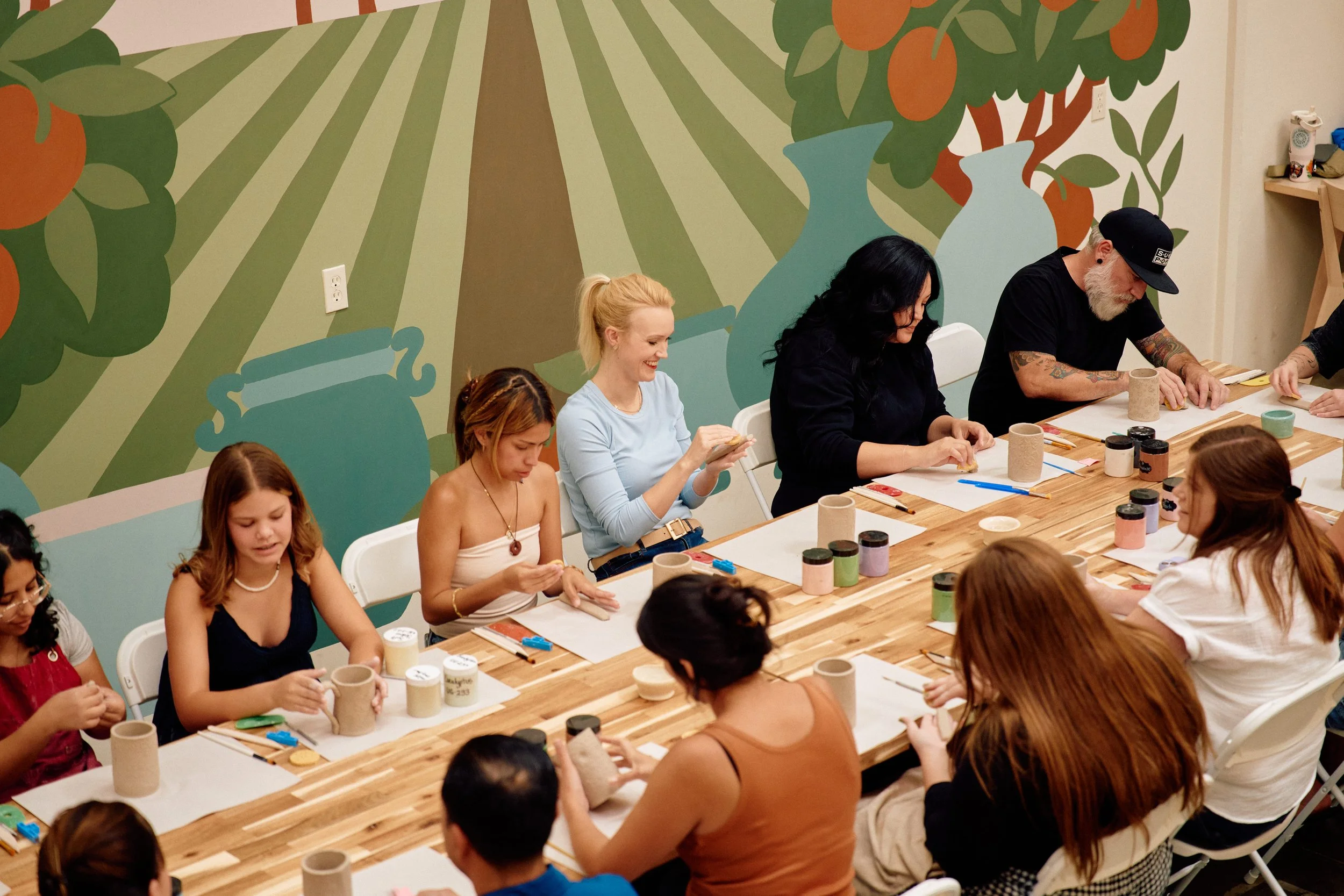
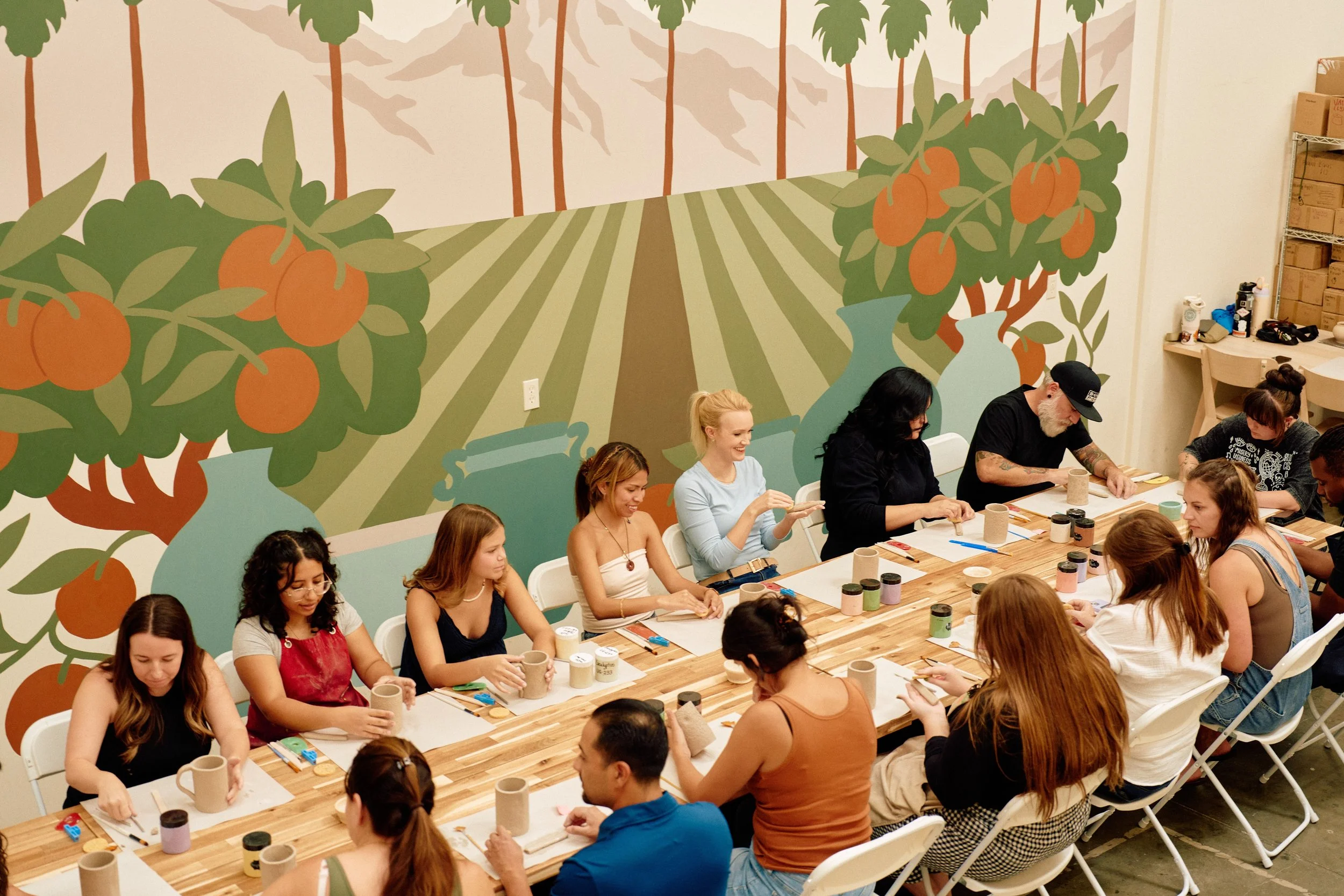
This morning I was up early setting tables, arranging flowers, and welcoming beautiful mamas and their families to our annual Mother’s Day Tea at Mud Hut Pottery Studio — back-to-back events, full house, full heart.
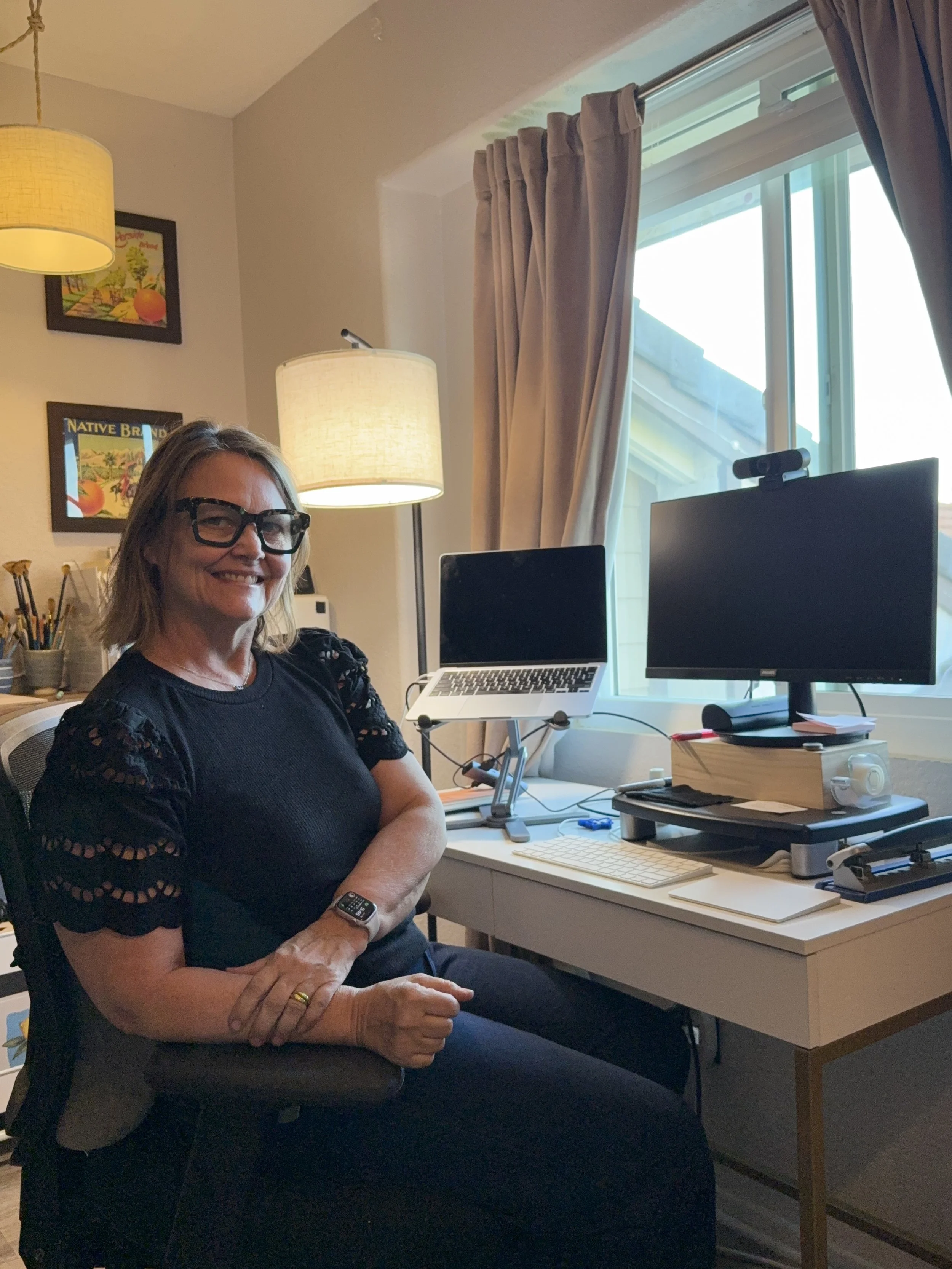
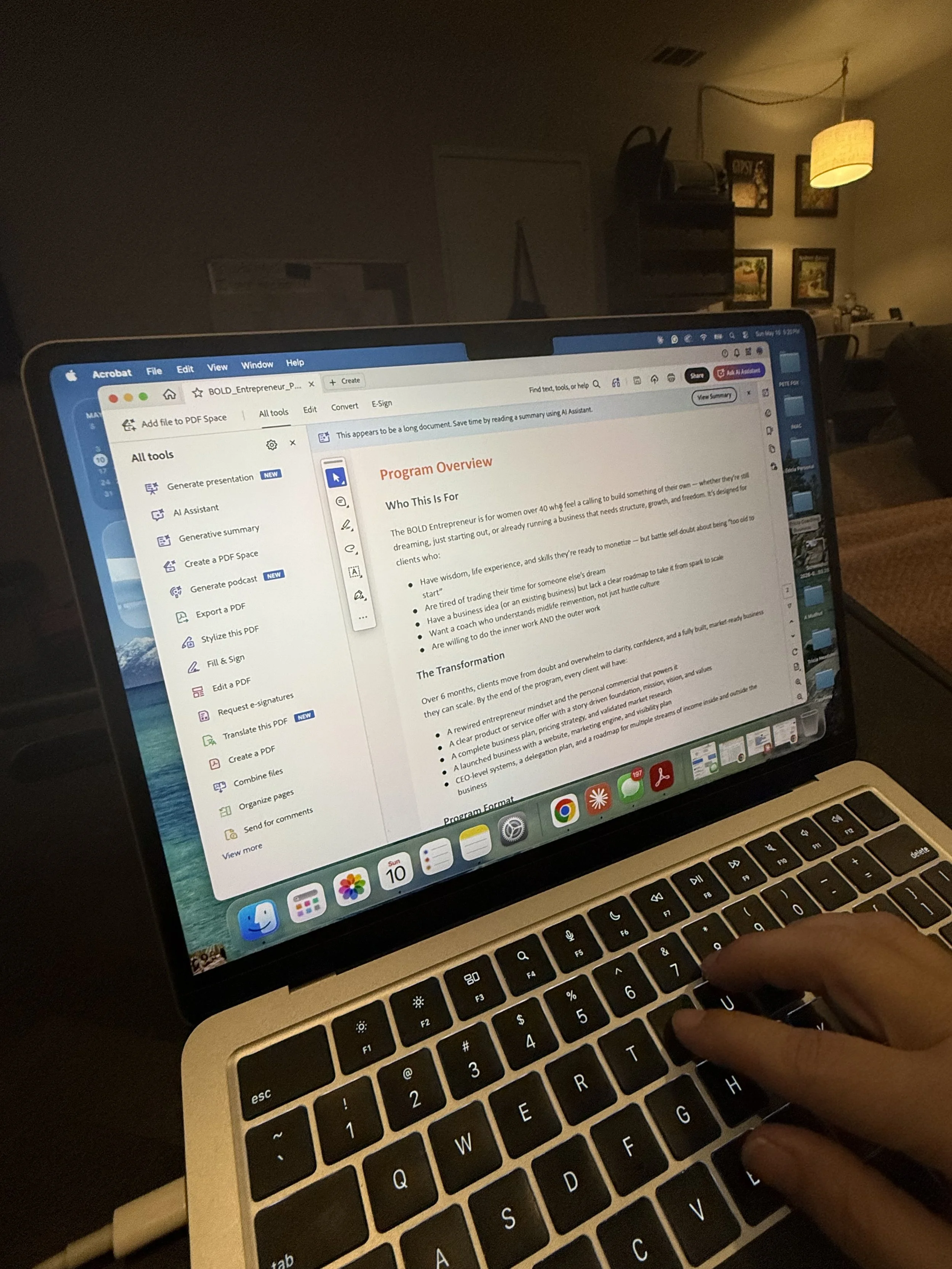
Tonight I’m at my desk, curriculum open, building my coaching business.
This is what entrepreneurship actually looks like. Not the highlight reel. The whole day.
This is the volleyball mom tribe. We all had responsibilities today but loved that we came together to celebrate beautiful Ari’s Quinceañera.
You’ve already been doing this
Here’s what I know about you, mama:
You’ve been managing the impossible for years. The job and the kids. The side hustle and the school pickups. The dream you keep carrying around in your head while you fold laundry at 10pm.
You’ve climbed the corporate ladder while running a household. You’ve shown up for everyone else while quietly wondering when it’s your turn.
You think you’re not ready to start the business, launch the idea, make the move.
But you’ve been ready. You’ve been training for this your whole life.
My story isn’t special. It’s a blueprint.
I was a teacher. A good one. Twelve years in education, a master’s degree, a safe pension on the horizon.
But there was something in me that kept saying: there is more.
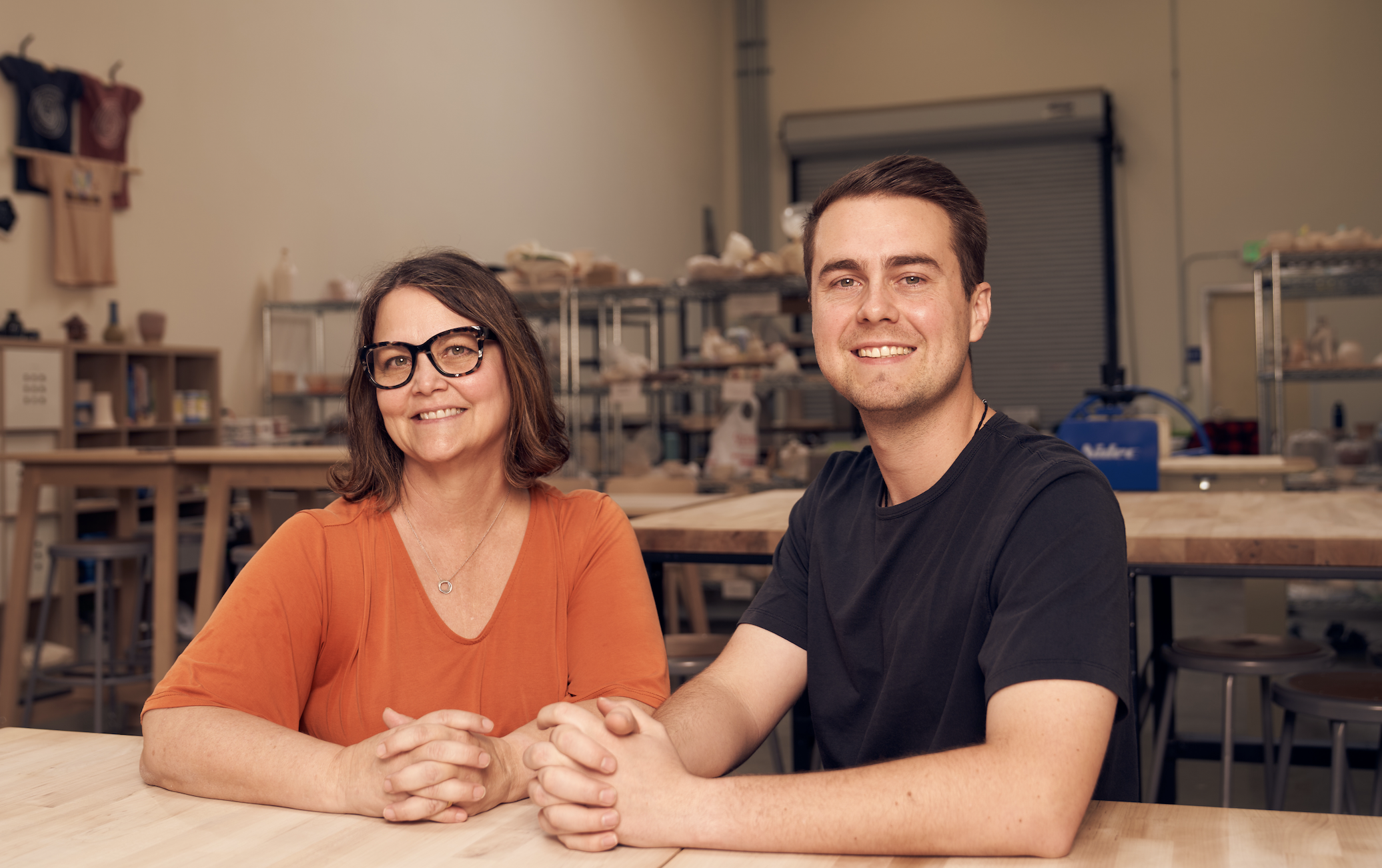
So I moved. Into sales. Into real estate. Into co-founding a pottery studio with my son Chase that grew to significant revenue in under three years. Into coaching the women I kept seeing stuck at the same crossroads I once stood at.
Every single pivot began with fear. Every single one.
And I moved anyway. Because action is what cures fear. Not waiting. Not planning forever. Moving.
This Mother’s Day, I want you to hear this
You don’t have to choose between being a great mom and building something of your own.
You don’t have to wait until the kids are grown, the mortgage is paid, the timing is perfect.
You don’t have to have it all figured out before you begin.
The woman who dances at a quinceañera, hosts a Mother’s Day Tea, and still comes home to build her dream is not superhuman.
She’s just decided that her dream matters too.
You are ready. Right now.
Not when life slows down. (It won’t.)
Not when the fear goes away. (It doesn’t.)
Now. With this life. This season. This beautiful, messy, full life you’re already living.
I’m Tricia Fox. I’m a wife, a mom of five, a grandmother, and an entrepreneur who built multiple businesses after 40. I help high-capacity women stop waiting and start building — boldly, on purpose, and without apology.
I’ve done it. I know you can too.
And I’m here — when you’re ready to take that first BOLD step.
Happy Mother’s Day. 🔥
With love and tough love,
Tricia Fox
Business & Wealth Coach | triciafox.org
—
Ready to take your first step? Visit triciafox.org or follow @the.bold.coach on Instagram.
The work never ends, but it is my work and it is rewarding.
You Are the Asset!
The D in Bold is Develop Wealth- Wealth is More Than Dollar Signs.
I am writing this from the table.
Not my desk. Not the studio. The massage table — hour one of my monthly massage, the same appointment I keep on the calendar, whether the month was easy or whether it broke me.
And every time I lie down, I have the same realization.
This is the work most entrepreneurs forget is the work.
The D in BOLD is Develop Wealth. It is the fourth phase — the one where you stop building a business and start building a portfolio. Multiple income streams. Real estate. Investments. Passive income. The architecture of financial freedom.
Most women think Developing Wealth is only about money. The deals. The doors. The next stream of income. It is not.
Design Wealth is about protecting and compounding the assets that produce the money. That is a very different question.
And here is the asset most women are leaving completely unprotected.
You.
I want you to picture the woman who will build the wealth you want.
She is going to spot the deal that everyone else missed. She is going to negotiate the contract that funds the next door. She is going to design the offer, lead the team, hire help, decide which streams to add, and which to walk away from. She is going to do that for the next ten years, twenty, thirty.
She has to be sharp. She has to be steady. She has to be able to think clearly under pressure and still be a human being at the end of the day.
That woman is you.
If you burn her out, the whole portfolio stops compounding. There is no real estate strategy that works without her. There is no business model that runs without her. There is no investment thesis she can execute when she is depleted, sleep-deprived, resentful, and running on caffeine and panic.
You are the asset. You are the engine. You are the only piece of the wealth machine that cannot be replaced, refinanced, or re-bought.
So why is she the line item you keep cutting from the budget?
Today, on the table, I started counting all the times I have almost canceled this appointment.
Money was tight that month. The studio needed me. A kid needed me. I had a launch. I had a board meeting. I had a deal closing. I had — you know the list. You have your own version of it.
The one rule I made for myself, almost a decade ago now, was that the massage stays. Even when money is tight, the massage stays. Even when the calendar is full, the message stays. Even when I feel guilty, the message stays.
It is not because I am precious about it. It is because I learned the hard way that I do not get to be a wealth builder if I will not be a body.
Let me tell you what self-care actually looks like in my life — not the version on Instagram.
It looks like a walk in the morning before the inbox owns me. Forty-five minutes outside, nothing in my ears half the time, just my own thoughts catching up with me. Some of the best ideas I have ever had for the studio, for real estate, and for a coaching offer came on those walks. Not at my desk. Not in a meeting. On a walk.
It looks like one podcast a week that fills me back up — a voice I trust, on a topic that lights me up, while I am doing something my body needs anyway. Doubling the asset.
It looks like the monthly massage. The annual checkup, I actually go to. The eight hours of sleep I will not negotiate down to seven anymore. The food that does not come from a drive-thru on the way to a deal.
None of this is glamorous. It is maintenance. It is the same maintenance you would do without question on a rental property, a car, or a piece of equipment that produces income for you.
You would never let your most valuable asset go a year without service.
You are the most valuable asset.
There is a particular kind of pride that keeps women in the wealth-building phase from doing this work. Most of us do not recognize it as pride.
It looks like dedication. It sounds like discipline. It feels like sacrifice for the people we love.
It is the belief that the proof of how seriously you take this is how much of yourself you are willing to grind down to build it.
That belief will cost you more than any bad deal you ever sign.
I have watched it happen to women I admire. Brilliant builders. Real revenue. Real momentum. And then — a body that quits. A marriage that frays. A clarity that disappears right when the next big decision is on the table. The wealth they were building cannot be enjoyed by the woman they have become, because she is too tired to feel it.
You did not come this far to build a fortune you cannot live in.
Here is the part of Design Wealth that nobody tells you.
The same discipline you used to build the business is the discipline that has to be turned inward now.
You did not build your revenue by hoping it would happen. You scheduled it. You forecasted it. You put it on the calendar and protected it and treated it like a non-negotiable appointment with the future you wanted.
Self-care, at this phase, gets the exact same treatment.
It is on the calendar. It is in the budget. It is a line item, not an afterthought. It is protected like a client meeting, because it is a meeting — with the only person who can actually run this portfolio.
If you are early in your business and money is tight, this is the move that feels impossible. I know. I have been there. The first massage I ever budgeted for, I felt guilty paying for. I did it anyway. Twelve years later, that habit is one of the reasons I am still here, still building, still in love with the work.
You cannot wait until you can "afford" to take care of yourself. You afford it the same way you afford anything else that matters — you decide, and then you build the budget around the decision.
So here is the Design Wealth instruction, plain and direct.
Put yourself on the asset list.
Pull out your calendar today and book the appointment your body has been asking for. The massage. The doctor. The therapist. The walk. The day off. The hour with no screens. Whatever the version is for you — book it before you finish reading this post.
Then put it in the budget. Make it a real number, not a wish. The same way you budget for software, for inventory, for ads, for the lease — you budget for the woman who runs all of it.
Then defend it. When the launch heats up, when the deal is closing, when the kid needs a ride, and the team needs a decision, and the calendar wants to swallow the whole thing — the appointment stays.
Because the appointment is not a reward for the work. The appointment is part of the work.
Believe. Own It. Launch. Develop Wealth.
Believe that you are the most valuable asset in your portfolio. The wealth you are building cannot exist without the woman who is building it. You deserve wealth.
Own the truth that self-care is not soft. It is a strategy. It is the engine's maintenance schedule that produces every dollar you will ever make.
Launch & Lead with a calendar and a budget that reflect it. Schedule the care. Fund the care. Treat it like the line item it is.
Develop Wealth that you will actually be alive to enjoy. Build the portfolio. And build the woman who gets to live inside it.
You are the asset.
Protect her.
Tricia Fox is a women’s business and wealth coach, entrepreneur, and co-founder of Mud Hut Pottery Studio. She helps capable, driven women move through fear and into the businesses, wealth, and lives they were always built for. Find her at triciafox.org.
The Personal Commercial: Who You Say You Are When No One’s Listening.
-An exercise that took me from rookie to nearly $2 million in one year.
Eleven years ago, I wrote a commercial.
Not for Instagram. Not for a website. Not for anyone.
I wrote it for me.
I was a rookie salesperson—hungry and eager. I felt convinced I would crack the thing wide open, yet I was completely riddled with self-doubt and limited thinking. I never knew which side of me would take the lead each day. Some mornings, I felt unstoppable. Most mornings, I didn’t. My inner critic worked overtime to convince me I was a fraud. Imposter syndrome took hold in full force.
That first year was hard—not "challenging in a way that builds character" hard, but truly difficult. I didn’t hit the numbers or build the pipeline my company expected, and I started to wonder if I had misread my ambitions.
So I did what every hungry person eventually does: I started reading every sales book I could get my hands on. Some of them were forgettable. One of them changed my life.
It was The Magic of Thinking Big by David Schwartz.
If you haven’t read it, put it on the list. It’s not flashy. It’s not a TikTok thread. It’s a 1959 book that’s still in print because it works. And buried in its pages is one of the simplest, most uncomfortable, most effective exercises I’ve ever done.
Sell yourself to yourself.
That’s it. Schwartz instructs you to write a commercial for yourself — the way an ad copywriter would write one for a product they were trying to sell. You write it. You read it. Every morning. In the mirror.
Yes, the mirror—I know.
I rolled my eyes the first time I read the assignment. And then I did it anyway. Because I had nothing left to lose, and the ceiling I was bumping my head against was clearly inside me, not outside.
Here’s mine. I read it out loud every morning that year.
Meet Tricia. A really important person who has an important career. I am a big thinker, so I think big. I think big about everything. I am a problem solver. I provide an extravagant lifestyle to my family. I believe in happiness, progress, and prosperity. I deserve to be wealthy, so I only think that way. I can win others over because I am charming, intelligent, knowledgeable, well-educated, sincere, and eager to help. I am a leader, and those around me look to me for advice. I am lucky and have positive energy. I am good at anything I do. I care about others and the kids in my territory. This is why I have been highly successful. I have what it takes to win. Go forward, Tricia. Sell one million dollars this year.
I read that out loud. Every morning. Looking right at my own face. Feeling, most days, like a complete fraud.
By the end of that year, I sold nearly two million dollars.
Was it the commercial?
Honestly, I believe a combination of factors contributed: luck, some manifestation, a lot of hard work, the territory I worked in, the economy that year—plenty of factors outside my control.
But the biggest factor — the one that mattered more than any of those — was that I started believing the version of me on the page.
You can’t sell anyone on a version of you that you don’t believe in yourself.
That’s the whole game. Sales, business, leadership, motherhood, relationships, and money—all of them depend on what you actually believe about yourself when no one else is in the room. The rest is just performance, and people can sense when it’s inauthentic.
The mirror exercise didn’t make me successful by accident. It worked because it forced me to repeat a story about myself until my body finally accepted it. Until the woman in the mirror and the woman in the commercial were one and the same.
Why I’m telling you this now
The first phase of the framework I coach — The BOLD Blueprint — is Believe. Before we ever get to action, before we plan a launch, before we look at numbers or strategy, we look at what you actually believe about yourself.
Because every plan we build will come up against that belief. Every launch will get filtered through it. Every uncomfortable action will run into it like a wall.
You can’t out-strategize a self-image that says you don’t deserve the life you’re trying to build.
You can rewrite the self-image. That’s the whole point.
Your turn. Here’s the assignment.
Write your commercial.
Sit down — today, this week, before this email gets buried — and write the ad. Not for a friend. Not for an audience. For you. Write it the way you’d want to be sold something you’re a little skeptical of, but secretly hoping is real.
A few rules:
• Write it in the present tense. Not "I will be." "I am."
• Include both the boring and the specific. "I provide an extravagant lifestyle to my family" was a line in mine, as was "I care about the kids in my territory." Mix the big with the small.
• End with a marching order. Sell one million dollars this year. Yours might be to sign three new clients this quarter. Or finish the manuscript. Or walk away from the job by December.
• Then — and this is the hard part — read it. Out loud. Looking at yourself. Every morning for thirty days.
You will feel ridiculous. Do it anyway. The ridiculousness is the point. It means the muscle is new.
After 30 days, write back to me and tell me what changed. What felt different? What you stopped tolerating. What you started asking for.
I am not promising you two million dollars. I am promising you that the woman in the mirror will start to look like the woman on the page — and once that happens, everything you’ve been waiting on starts to move.
Believe it. Then own it. Then build from there.
— Tricia
Don’t forget to sign up for my next workshop by clicking the link below.
I Didn't Start With a Down Payment. I Started With a Spare Room.
It All Begins Here
Turn Your Dreams Into Action
Confidence does not arrive with a bold entrance.
Almost every woman I coach is waiting for the wrong thing. She is waiting to feel ready. She is waiting to feel certain. She is waiting for the moment when the fear lifts and she finally feels like the woman who can do the bold thing.
That moment is not coming. Not because she is broken — because that is not how this works.
Confidence does not lead. Action does. Every time you take a step despite self-doubt, you don't make the fear go away. You just prove it is no longer in charge of you. You build the evidence file that says I can.
Confidence is not about having all the answers. It is about trusting that you can figure it out along the way.
Action cures fear. Always. The step you've been avoiding is the step that sets you free.
— — —
I'll tell you how the eight doors actually started.
Eleven years ago, we rented out a spare room in our house as a short-term rental. That was it. Not a property. Not a portfolio. A bedroom we already owned, a listing online, and the willingness to let strangers stay in our home.
This was in the middle of me leaving my career as a school administrator and taking action on my dream to be an entrepreneur. We had just opened our first business — a franchise math tutoring center in our town — and money was tight. Renting out the room seemed like a way to bring in extra income to help pay the mortgage.
That is what investing in real estate looked like for me on day one. Not strategic. Not visionary. Survival.
But here is the thing about action: it doesn't care why you took it. It only cares that you took it.
Renting out that bedroom did three things I could not have predicted. It taught me how to host strangers, how to price a stay, how to manage a listing. It brought in income that helped us breathe. And — most important — it proved to me that I was a woman who took action when I was scared instead of waiting for someone to rescue me.
That last one mattered more than the money.
A few years later, we added the casita at my mother-in-law's place in Palm Springs as another short-term rental. Same idea. Use what was already there.
In 2020, we built an ADU at our house. That was the first time we were actually adding a unit, not just monetizing one we had. It felt like a bigger leap because it was — but it didn't feel like a giant leap, because by then we had already proved to ourselves we knew how to host, manage, price, and clean. The skills were stacked.
In 2022, we started buying property out of state. That is when it became a portfolio.
Eight doors didn't start with a brave act. They started with the willingness to rent out a bedroom because money was tight and we needed it to work.
That is action. That is all action has ever been.
— — —
Here is what I want you to take from this:
You do not have to be visionary. You do not have to be financially comfortable. You do not have to have a strategy. You do not have to feel ready.
You have to take one small action with what you already have.
That is the whole secret.
The first action does not have to be impressive. It does not have to be the action that changes your life. It just has to be the action that proves to you, today, that you are willing to do the thing instead of think about the thing.
For me, it was a spare room. For you it might be a phone call. A landing page. A pricing email. A first session with a paying client. The booking. The post. The offer. The ask.
Whatever it is, it is downstream of one move you can make this week.
— — —
This is the philosophy that runs through my coaching practice and through my BOLD Blueprint — the four-phase framework I take women through to move from paralyzed dreamer to confident wealth builder. The whole thing is built on a single conviction: action cures fear. The smallest move is almost always the right move because it is the only one you will actually take.
The spare-room story is one of mine. The framework holds dozens like it. Yours will start the same way every meaningful story starts — with one small action that proves to you that you are willing.
— — —
You do not need to be fearless to reach your goals. You need to be willing.
Willing to try.
Willing to learn.
Willing to do the thing badly the first time.
Willing to believe that the version of you who can do this exists on the other side of one bold action.
The road won't be smooth. Growth never is. But every step you take while still afraid is a step that proves the fear was never an accurate measurement of your capability. It was just an old habit.
— — —
So here is the question I want you to sit with:
Not am I ready? Not do I have enough? Not what if it doesn't work?
The question is: what is the smallest action I can take this week that will prove to me I am the woman I am becoming?
That move is the medicine. The clarity comes after. The confidence comes after. The portfolio, the business, the freedom — all of it comes after.
You do not have to feel ready. You have to be willing.
Move.
Go.
— — —
Tricia Fox is a women's business and wealth coach, entrepreneur, and co-founder of Mud Hut Pottery Studio. She helps capable, driven women move through fear and into the businesses, wealth, and lives they were always built for. Find her at triciafox.org.
The L in BOLD: Launch & Lead
You're a CEO Now. Build Like One.
There comes a moment in every bold woman's journey where the work changes.
You believed it. You did the inner work — rewired your worth, shifted your money story, stopped seeing yourself as the employee and started seeing yourself as the owner. That was Believe.
Then you moved. You took the uncomfortable action. You sent the email, made the offer, signed the lease, opened the doors before you felt ready. You proved to yourself that action cures fear. That was Own It.
And now? Now you have something real on your hands. A business that exists. Customers who are paying you. A thing that is bigger than the dream you started with — and bigger than you can run by instinct anymore.
This is the part most women aren't prepared for.
This is Launch & Lead.
— — —
Launch & Lead is the builder phase. It is the moment where you stop thinking like a hobbyist or a dreamer and start thinking like a CEO.
You stop running on hustle and start running on structure. Sales strategy. Marketing. Pricing. Team. Operations. Growth plan. The wild scrappy energy that got you off the ground was exactly what was needed for Own It — but it will not build you a real business that lasts. Structure will. Systems will. A business model will.
In my work, this is the phase where my client gets a big view of her job. She thinks her present work is important — because it is. She competes with the best. She sets high goals. She sees the long run.
She stops asking can I do this? and starts asking what does the next version of this look like at scale?
That shift is everything.
— — —
I'll tell you what Launch & Lead looked like for me.
Mud Hut started in my backyard shed because the phone wouldn't stop ringing — that was Own It, the action before the perfect setup. But the day we opened our real doors, the work changed entirely. I wasn't a woman with a pottery dream anymore. I was running a company.
And I felt it immediately. The questions got bigger. How do I price classes so the math actually works at volume? How do I hire? How do I build a brand people remember? What is the marketing engine that fills the calendar without me posting on Instagram every single day? What is the model that scales past me?
These are not questions you answer with hustle. These are CEO questions. They require frameworks, systems, and someone to teach you the moves you have not yet made.
So here is the part of L that nobody likes to hear:
You probably don't have the blueprint yet. And you don't have to invent one.
— — —
There is a particular kind of pride that will keep your business stuck in Launch & Lead forever, and most women don't recognize it as pride.
It looks like dedication. It sounds like discipline. It feels like grit.
It's the belief that you are supposed to figure out how to scale your business by yourself.
That hiring a coach is for people who can't think for themselves. That the proof you really earned the success is that you built every system from scratch. That your business doesn't count unless you bled to figure out the model alone.
That belief is a tax on your time, your energy, and your bank account. And it is the most expensive thing a woman in the L phase will ever pay.
CEOs do not build alone. Not the ones who succeed. Not at scale. Not for long. Every founder you admire has a roster behind her — coaches, mentors, advisors, people who have already walked the road she's currently on.
She is not smarter than you. She is just unwilling to spend two years figuring out something a person down the road could teach her in a month.
— — —
I want to tell you something it took me too long to learn.
When I was building Mud Hut into a real business, I tried to invent every piece from scratch. Pricing. Marketing. Team. Operations. Then I started layering on the real estate portfolio — the same pattern. Reading the books. Watching the videos. Trying to teach myself what someone else could have just handed me.
I have a master's in education and ten years in sales. I am not someone who lacks resources. And I was still trying to invent the wheel.
The day I started hiring expertise — coaches, mentors, the people who had already built what I was trying to build — was the day my business stopped feeling impossible. The blueprint they gave me wasn't magic. It was just theirs. They had already paid the tuition of trying it the wrong way. I got to skip that bill.
That is what a great coach does. They hand you the map you don't have yet — the one you would otherwise spend years drawing in the dark.
I am still doing this work, by the way. Right now I am inside a coaching framework myself, learning from people who have built what I am building next. The coach hires the coach. That is how this actually works.
— — —
So here is the Launch & Lead instruction, plain and direct.
If you don't have the blueprint to build the business of your dreams — go find someone who does.
A coach who has built what you are trying to build. A mentor who has run the season you are entering. A guide who can hand you a structure instead of asking you to invent one.
When you are looking, ask three questions.
One. Have they done it themselves? Not in theory. In real life, with real revenue, real wins, real failures. A coach who has only ever coached is teaching you to swim from the side of the pool. Find one who has been in the water.
Two. Do they have a framework you can follow? The right coach has a path. A sequence. A blueprint. Not vibes and not platitudes — a structure you can measure your progress against.
Three. Do they tell you the truth? Not what you want to hear. What you need to hear. The right coach will name what isn't working in your business before they tell you how good your dream is.
If a coach checks all three boxes, hire them. Pay them what they ask. Do the work they assign. Stop trying to think your way to a business you have never built before.
— — —
Launch & Lead is where the real builders separate from the dreamers.
Not because the builders are smarter. Because they are willing to do two things the dreamers won't.
They are willing to think bigger — to take a real CEO view of their work, set goals that scare them, and play the long game even when the short game would be easier.
And they are willing to stop building alone — to invest in the people, the frameworks, and the help that turn a scrappy startup into a real company.
That is the move. That is Launch & Lead.
You are not a hobbyist. You are not a dreamer. You are a CEO now.
Build like one.
— — —
Believe It. Own It. Launch.
Believe that you are the woman who can build a real business — one with structure, revenue, systems, and a future bigger than what you can hold in your head today.
Own the next move. Stop reading another book, listening to another podcast, "researching" for another six months. Decide what your business needs to become and find someone who can help you get there.
Launch. Hire the coach. Get the blueprint. Build the model. Trade money for time. Trade pride for progress. Trade isolation for the kind of growth that only happens when you let someone show you the way.
You were never meant to build alone. Don't.
Go.
— — —
Tricia Fox is a women's business and wealth coach, entrepreneur, and co-founder of Mud Hut Pottery Studio. She helps capable, driven women move through fear and into the businesses, wealth, and lives they were always built for. Find her at triciafox.org.
The B in BOLD-Believe It and Build It
The B in the BOLD Blueprint isn't about motivation. It's about rewiring the way you see yourself — and what you're actually worth.
I want to tell you about a version of myself I am not proud of. Not the version that failed — I can live with failure. The version that succeeded and still didn't believe it.
I have been the top producer. I have built a pottery studio from scratch in under three years. I have a real estate portfolio, a master's degree, twelve years in education, a decade in sales. By every measurable standard, I have built something real. And for a long time — longer than I care to admit — I still walked into rooms underestimating what I had to offer. Still priced my time like I was asking for a favor. Still waited for someone else to validate what I already knew.
That is not a confidence problem. That is a belief problem. And it is one of the most expensive problems an entrepreneur can have.
The BOLD Blueprint — B is for Believe It and Build It
The BOLD Blueprint is the framework I use with entrepreneurs and executives who are capable, experienced, and still somehow stuck. It is built on four pillars — and the first one is the foundation everything else rests on. You cannot out-execute a broken belief system. You cannot build a business that charges what it's worth if you don't first believe you are worth it. The B comes first because without it, nothing else holds.
Here is what I have learned — from my own journey and from working with people who are exactly where I once was: the gap between where you are and where you want to be is rarely about skill. It is almost always about belief.
You already know how to do the work. You have the experience, the track record, the receipts. What you are missing is the internal permission to own it — to stand behind it fully, charge for it honestly, and stop apologizing for how good you actually are.
"You cannot build a business that charges what it's worth if you don't first believe that you are worth it."
What undercharging is really telling you
If you are stuck — charging less than you know you should, taking clients that drain you, hesitating before every price conversation — I want you to look past the logistics of that for a moment. The rates are not the problem. The hesitation is.
Undercharging is not a pricing strategy. It is a belief system in disguise. It is your brain running old programming — programming that says you need to earn the right to ask for what you're worth, that someone might say no, that you haven't quite done enough yet to justify the number you actually want to charge.
I know that programming. I ran it for years-it is why I quit coaching the first time. And what I can tell you is that no amount of hustle, no new certification, no additional credential will fix it — because it was never an evidence problem. It was always a belief problem.
How you rewire it
Rewiring your brain to recognize and own your worth is not a one-time decision. It is a practice. And like any practice, it starts small and builds with repetition.
It starts with an honest inventory. Not a humble one — an honest one. Write down what you have actually done. The results you have produced. The problems you have solved. The years you have invested. Most entrepreneurs, when they do this exercise without filtering it through self-doubt, are genuinely surprised by what is already on the page.
Then it moves into language. The words you use about yourself and your work are not just communication — they are reinforcement. Every time you say "I just do..." or "it's only..." or "I'm not sure if this is right for you but..." you are chipping away at your own foundation. Owning your worth means speaking about your work the way you would speak about the work of someone you deeply respect.
And then it requires action before the belief is fully formed. This is the part nobody wants to hear — but it is the most important part. You do not wait until you feel worthy to charge what you're worth. You charge what you're worth, and the feeling follows. You take the meeting before you feel ready. You raise the rate before the fear goes away. The brain learns from evidence, and you have to create the evidence first.
"You do not wait until you feel worthy. You charge what you're worth — and the feeling follows."
What believe it and build it actually means
The B in the BOLD Blueprint is not a pep talk. I am not asking you to stand in front of a mirror and repeat affirmations until something clicks. I am asking you to do something harder — to look at the evidence of your own life and decide to take it seriously.
Believe it means accepting, without asterisks, that what you have built and what you know has real value. Not potential value. Not value once you do one more thing. Real, current, chargeable, scalable value. Right now.
Build it means letting that belief drive decisions. How you price. Who you take on as a client. What you say yes to and what you finally stop tolerating. A business built on real belief looks different from the outside — because the person running it moves differently.
I built a pottery studio on belief before I had proof it would work. I built a coaching practice on belief before I had a full roster. I left jobs that paid well because I believed my expertise was worth more in my own hands than in someone else's org chart.
Every one of those decisions started with the same thing — a choice to believe it before the evidence was complete. And then to build anyway.
The question I'll leave you with
What would you do differently this week if you fully believed — without conditions, without qualifiers — that your work was worth exactly what you know it's worth?
That is not a rhetorical question. Write it down. The answer is your starting point.
The B comes first. Everything else in the BOLD Blueprint builds from here. And I promise you — once you get this one right, the rest moves faster than you think.
If you are an entrepreneur who is capable, experienced, and still somehow playing small — the BOLD Blueprint was built for you. Let's start with the B and build from there.
The O in BOLD: Own It
Confidence isn't a permission slip you receive. It's a receipt you earn after the action. The lie that keeps capable women small — and how to break it.
You Are Never Going to Feel Ready. Move Anyway.
There is a lie that keeps capable women small, and almost no one names it out loud.
The lie is that you are supposed to feel ready before you move.
That confidence comes first. That clarity comes first. That the perfect moment is real and you should keep waiting for it. That a woman who is built for more should somehow feel built for more before she does the bold thing — and if she doesn't feel that way yet, she should keep planning, keep preparing, keep waiting until she does.
That's not how this works.
Confidence doesn't arrive with a trumpet. It builds quietly, one small uncomfortable action at a time, as you show up for yourself on days when you don't want to. It grows when you choose to try, even when you're not sure of the outcome. Every single time you take action despite self-doubt, you reinforce the belief that you're capable. Every time you wait, you reinforce the opposite.
Confidence isn't a permission slip you receive. It's a receipt you earn — and you only get it after the action.
I'll tell you when I learned that.
I had been picturing a pottery studio for a while. I knew it would happen. I just didn't have the full blueprint yet.
So I stopped waiting for one.
I found the space and reached out to the landlord directly. While the building was being built out for occupancy, I started taking the small actions I could take right now — I built the website, set up the Yelp page, claimed the Instagram and Facebook accounts, started telling people. I didn't have a polished launch plan. I had momentum, and momentum was enough.
Then the phone started ringing.
People wanted classes. They wanted to make pottery. They wanted to know when we opened. And I was nine months away from a real space.
I couldn't turn them away. So Mud Hut Pottery Studio started in the studio shed in my backyard. Not the version I had pictured. Not the version anyone would have called "ready." The version that existed because I had already taken action before the perfect setup was in place.
By the time we officially opened our doors nine months later, classes were already in full swing.
Three years later, that studio was doing $900,000 in revenue.
The clarity I had been waiting for? It came after the small actions. Not before. Every meaningful answer about that business — the products, the pricing, the team, the marketing — came from being inside the work, not from thinking about being inside it.
The same thing happened with the first rental property. And the second. And the eighth.
That is the rule, and it has been true for every bold woman I have ever coached.
Action creates the clarity you've been waiting for. Not the other way around.
The trap of waiting is that it feels productive.
You're researching. You're refining. You're "getting your ducks in a row." It looks like progress and it costs you nothing — which is exactly the problem. The thing you don't pay for, you don't believe in. The bold move you keep circling but never make starts to feel less like a future and more like a fantasy.
And then one of two things happens.
You watch someone else — someone less qualified, less prepared, less experienced than you — go ahead and build it. And you stand there with your beautiful spreadsheet wondering what they had that you didn't.
Or worse: years pass, and the dream you were "almost ready" for quietly becomes a regret you carry to dinner parties when someone asks what you do.
Neither one is the woman you actually are. Both are the woman that waiting created.
Here is what I want you to understand about willingness — because willingness is the whole game in the Own It phase.
You don't have to be fearless. You don't have to be certain. You don't have to have all the answers. You don't even have to feel confident.
You have to be willing.
Willing to try the thing badly the first time. Willing to send the email that might not get a yes. Willing to make the offer at a price you're not sure anyone will pay. Willing to publish the post, post the video, take the meeting, name the dream out loud to someone who could either help you or laugh at you.
Willingness is the only door into Own It. There is no other entrance. There is no version of building a real business — or a real life — that does not require you to do the uncomfortable thing before you feel like doing it.
And here is the gift no one tells you: every time you do, you become someone who does.
That is how identity actually shifts. Not through affirmations in the mirror. Through a track record of action you can point to and say — that was me. I did that. I can do it again.
The road won't always be smooth. Growth never is. But every step you take while still afraid is a step that proves the fear was never an accurate measurement of your capability. It was just an old habit.
In the BOLD Blueprint, the O stands for Own It.
It is the phase where you stop waiting and start moving. You do not graduate to Own It because you've fully resolved the fear. You graduate because you are willing to take the step in spite of it. The step you've been avoiding is almost always the step that sets you free.
This is the work I do with women who are tired of being the one with the great idea. Action planning. Fear mapping. First 90-day moves. The structure that makes the uncomfortable thing actually happen — not because you finally feel like doing it, but because you've built a plan that doesn't let you wait.
If you are sitting in intention right now, you do not need a better plan. You need a smaller move. The one you can take this week. The one that costs you something. The one that requires you to do a thing instead of think about a thing.
That move is the receipt. The clarity comes after. The confidence comes after. Both of them are downstream of action. Both of them have always been downstream of action.
Believe It. Own It. Move. Take Action
Believe that you don't need to be ready. You need to be willing. The version of you who is "ready" is the version on the other side of the action you keep avoiding.
Own that the waiting is a choice. A safe one. A familiar one. And one that is costing you the business, the wealth, the freedom, and the life you actually want.
Move. Today. Not the whole plan. Not the perfect version. One uncomfortable action that proves to yourself you are not the woman you used to be. Send the email. Make the call. Sign the lease. Publish the post. Name the price. Make the offer.
Action cures fear. Movement is the method. Confidence is the receipt.
You were never going to feel ready. You were always going to have to go first.
Go.
Tricia Fox is a women's business and wealth coach, entrepreneur, and co-founder of Mud Hut Pottery Studio. She helps capable, driven women move through fear and into the businesses, wealth, and lives they were always built for. Find her at triciafox.org.
Why I stopped building other people's empires.
Here's something nobody tells you about being great at your job: the better you are, the longer you'll stay somewhere that doesn't deserve you. I had been the top producer before — at more than one company. I knew how to perform. What I didn't fully reckon with was what I was trading in the process. Time. Energy. Expertise. The same raw material I could have been pouring into something of my own. One conversation with a CEO who had no mission, no standards, and no blueprint changed all of that. Forever.
I have spent my career creating wealth for other people. I was excellent at it. That was exactly the problem
I didn't take the job because I needed it. I took it because it looked like the right next move — a senior sales consultant role, a company with an established territory in my backyard (no travel commitment), a product I could believe in-I’m a sucker for anything that could have a positive impact on kids and educators. I had been the top producer before, at more than one company, and I knew how to get there again. On paper, it made sense.
Six months in, I knew I had made a mistake. Not because I wasn't performing — but because I finally understood what I was performing for.
I was creating wealth. Just not my own.
The pattern I finally named
I have spent the better part of my career being good at building things for other people. Sales numbers. Client relationships. Revenue. Reputation. I could walk into a company, learn the product, earn the trust, and produce. And somewhere at the top of the org chart, someone else's net worth grew.
That is how employment works. I understood that. What I didn't fully reckon with — until recently — is how long I had been doing it, and what I had been trading in the process. Time. Energy. Expertise. The same raw material I could have been pouring into something of my own.
"I was tired. Not burned out — tired of being excellent in service of someone else's bottom line."
Six months into this particular role, I had already seen enough. The company had been sold and rebranded. What remained was a fractured structure, scattered employees, and a leadership team that was moving fast without any real direction. They were building new programs, chasing higher margins, pitching more services — all while no one could clearly define what they already had, what was actually working, or where the company was even going.
I had walked into a company with no blueprint. And I was expected to sell their services.
The question nobody could answer
I sat down with the CEO. Not to complain — to understand. I asked him the questions I needed answered to do my job well, the same questions any leader should be able to answer about their own company.
What is the mission?
What are the standards — for hiring, for delivery, for what this company will and will not do?
What is the operating system — the repeatable process that works whether anyone is watching or not?
Who holds ownership over current processes?
Why do we do what we do?
He looked at me like I'd asked him to solve a math problem in a foreign language.
That silence lasted maybe four seconds. It told me everything.
"I wasn't talking to a leader who had dropped the ball. I was talking to a leader who had never picked it up."
This was a multimillion dollar company. They had lost $5 million the year prior. And the person at the top could not articulate a mission, a standard, or a system. The employees weren't failing. They were trying to build a house with no blueprints and no foreman. And I — six months in, not yet the top producer, but someone who had built real results before — was sitting in Zoom meeting realizing I understood this business better than its own CEO.
That was not a compliment to me. That was a crisis for them.
What that moment made clear
I have been the top salesperson. I have also walked into rooms where the product didn't work, the leadership didn't lead, and the structure didn't hold — and I have watched talented people grind themselves down trying to produce results from a broken foundation. I have been one of those people.
What I know now — what that conversation made undeniable — is that my value was never just in selling. It was in seeing. Seeing what was missing, what was broken, what needed to be built before anything else could work. That is not a sales skill. That is a leadership skill. A coaching skill. A builder's skill.
And I had been loaning it out to other people's companies for a very long time.
The wealth question nobody asks out loud
Here is the part most people won't say directly: I am done creating wealth for other people.
Not because I am ungrateful for what those roles taught me. Every company I worked for, every quota I hit, every client relationship I built — that was all education. Expensive, time-consuming, irreplaceable education. I don't regret any of it.
But I am 54 years old. I opened a pottery studio I built from the ground up. I have a coaching practice I am growing with intention. I have a real estate portfolio. I have a vision for what I am building — and it has my name on it, not someone else's.
The moment I realized I could walk into a CEO's office and diagnose the exact reasons his company was failing — and he couldn't — I stopped asking when I would leave. I already knew.
The energy I have spent making other people rich? I am redirecting it. The expertise I have been selling by the hour inside someone else's org chart? I am building with it now. For myself. For the clients I actually want to serve. For the future I have been postponing long enough.
What this means if you're where I was
If you are excellent at what you do and you are still doing it for someone else's bottom line, I want you to sit with that for a moment. Not with guilt — with honesty.
How long have you been creating wealth for other people? What would it look like to start creating it for yourself? What is the blueprint for your own empire — and have you ever actually written it down?
Those aren't rhetorical questions. They are the starting point. And they are exactly what I help people work through.
I decided that day to stop building other people's empires. I started building my own. And I haven't looked back.
If you're ready to stop loaning your expertise to someone else's vision and start building real wealth for yourself — let's talk. This is exactly the work I do.
Sign Up for My BOLD Business Blueprint
I Am Not Supposed to Be Here: And that's exactly why I do what I do
From teenage motherhood and hardship to entrepreneurship, real estate, and building a thriving pottery studio—this is the story behind it all. If you’ve ever felt behind, stuck, or unsure if you’re capable of more, this is your reminder: your past doesn’t define you, and it’s never too late to build the life you actually want.
“I was pregnant at 16.
Escaped an abusive relationship with a 3-month-old in my arms.
Divorced at 29 with four kids.
I am not supposed to be here.”
But I am. And I think that matters — not just for me, but for every woman reading this who has looked at her own life and wondered if it's too late, if she's too far behind, or if the things she's survived have somehow disqualified her from the life she actually wants.
They haven't. I'm proof of that. And this is my story.
Survival Was the Only Plan
When I got pregnant at 16, there was no vision board. No five-year plan. There was just — what do I do now? And the answer, for a long time, was survive.
When my friends were learning to drive at 16 — I spent it pregnant, being abused, giving birth, and then escaping with a 3-month-old in my arms, -all before my 17th birthday. It was a year of living hell.
At 20 I got married to a man nearly 11 years older. I had three more children, and by 29 I was divorced — a single mom of four starting completely over. No education. No work experience. All I knew was I didn't want to rely on my ex-husband for support.
Life didn't pause. It never does. So I didn't either.
"I worked multiple jobs — including driving a forklift at Lowe's — while putting myself through college in three years."
Not because it was easy. Not because I had help. Because I made a decision that my circumstances were not going to be my ceiling
Building a "Respectable" Life — and Still Feeling the Pull
Looking back I am not sure how I did it but I finished my Bachelor’s degree in a little less than three years. I became a teacher. Then a school administrator. From the outside, it looked like I had figured it out. Stable job. Respectable career. I even started a doctoral program because that's what you do when you're on that path.
But there was a voice that never went away.
There's more for you.
Not more in a flashy sense. More in a this isn't quite it sense. More freedom. More ownership. More alignment between who I was and how I was spending my days.
I found love again. Had my fifth baby at 39. And even in that full, beautiful, busy life — that pull didn't leave.
The Leap — and the Failure Nobody Talks About
So I left public education. I chose entrepreneurship.
And my first business didn't work out. I mean, why would a former English Teacher choose to open a math tutoring business? I knew I wanted to open a business, so a franchise seemed to make sense.
FAILURE!-That's the part people leave out of their success stories. The part where you bet on yourself and it doesn't pay off the way you thought it would. I know what that feels like — the doubt, the embarrassment, the quiet voice asking maybe this isn't for you after all.
I didn't listen to that voice. I pivoted.
I went into sales. After a a few successful sales years, my husband and I started investing in real estate — long-term and short-term rentals. We started building income in ways I had never experienced growing up. Real, tangible, generational wealth.
Clay, Quiet, and Waking Back Up
Then — in the middle of COVID, in the middle of a full life — I signed up for a ceramics class at my local community college.
It wasn't strategic. It was just something for me. A break from producing and managing and solving. A chance to create.
The last time I attended this community college, I was in full survival mode. I couldn’t even think of taking any classes that didn’t fit into my poverty exit plan.
This time was a little different, although the entire world was in survival mode, I wanted to do something for me, something enjoyable, something creative.
And somewhere between the clay and the quiet, something woke back up in me. A desire I'd been too busy to listen to. The feeling of building something from nothing — something that was mine.
"That's when entrepreneurship stopped feeling like a risk and started feeling like a calling."
Within two years of me taking that ceramics class, my son Chase and I opened Mud Hut Pottery Studio in my hometown, Riverside, CA. What started as an idea became a thriving business — one that's done nearly a million dollars in revenue and counting. A place where people don't just come to make pottery. They come to slow down, connect, and create. Mud Hut Pottery Studio has become Riverside’s premiere Creative Escape! I can’t tell you how much joy this space brings not only our family but countless others. This makes my heart fill with joy!
What I Know Now
Looking back, I can connect the dots. But living it? It was messy and uncertain and scary every single time.
What I know now is this:
Your past does not disqualify you from the future you want
Failure is not a stop sign — it's feedback
You don't need perfect conditions to move forward, you need a decision
The life you want is not reserved for other people — it's built, one choice at a time
I didn't arrive here because everything worked out. I got here because I kept going when it didn't.
Why I Coach
Today I coach women who feel that same pull — the one that says there's more for you. Women who are capable, driven, and stuck somewhere between where they are and where they know they could be.
I coach them because I've been every version of that woman. The scared one. The starting-over one. The one who failed and kept going anyway.
And I know what's on the other side.
If you’re reading this and thinking:
“I’ve waited too long.”
“I’ve made too many mistakes.”
“I don’t even know where to start.”
I want you to hear this clearly:
You are not behind.
You are not disqualified.
And it is not too late for you.
The question isn’t if you’re capable.
It’s whether you’re willing to take the first step.
Ready to Take That Step?
Join my free workshop — From Knowing to Doing — and let's figure out together exactly what's been stopping you and what your first real move is.